Grantmaking

Advance college completion for low-income women scholars who are driven towards positive social impact.

Institutional Partners

HOW OUR GRANTS WORK

The LCU Fund for Women’s Education does not award grants directly to individual scholars. Instead, we provide funding to our partner colleges and universities, which then disburse housing grants to selected students based on the LCU Fund’s eligibility criteria. Through this model, we support accredited institutions in delivering housing assistance to high-performing, low-income women scholars pursuing degrees in education, health services, public administration, social work, and visual and performing arts —ensuring they can focus on their studies, remain stably housed, and successfully complete their degrees.

Careful consideration is given to the balance of undergraduate and graduate scholars within each field which reflects the distinct educational pathways required for these professions and helps us provide meaningful support to scholars at various stages of their academic journey.

Context for Our Grantmaking

  • College completion is critical to women's social and economic mobility.

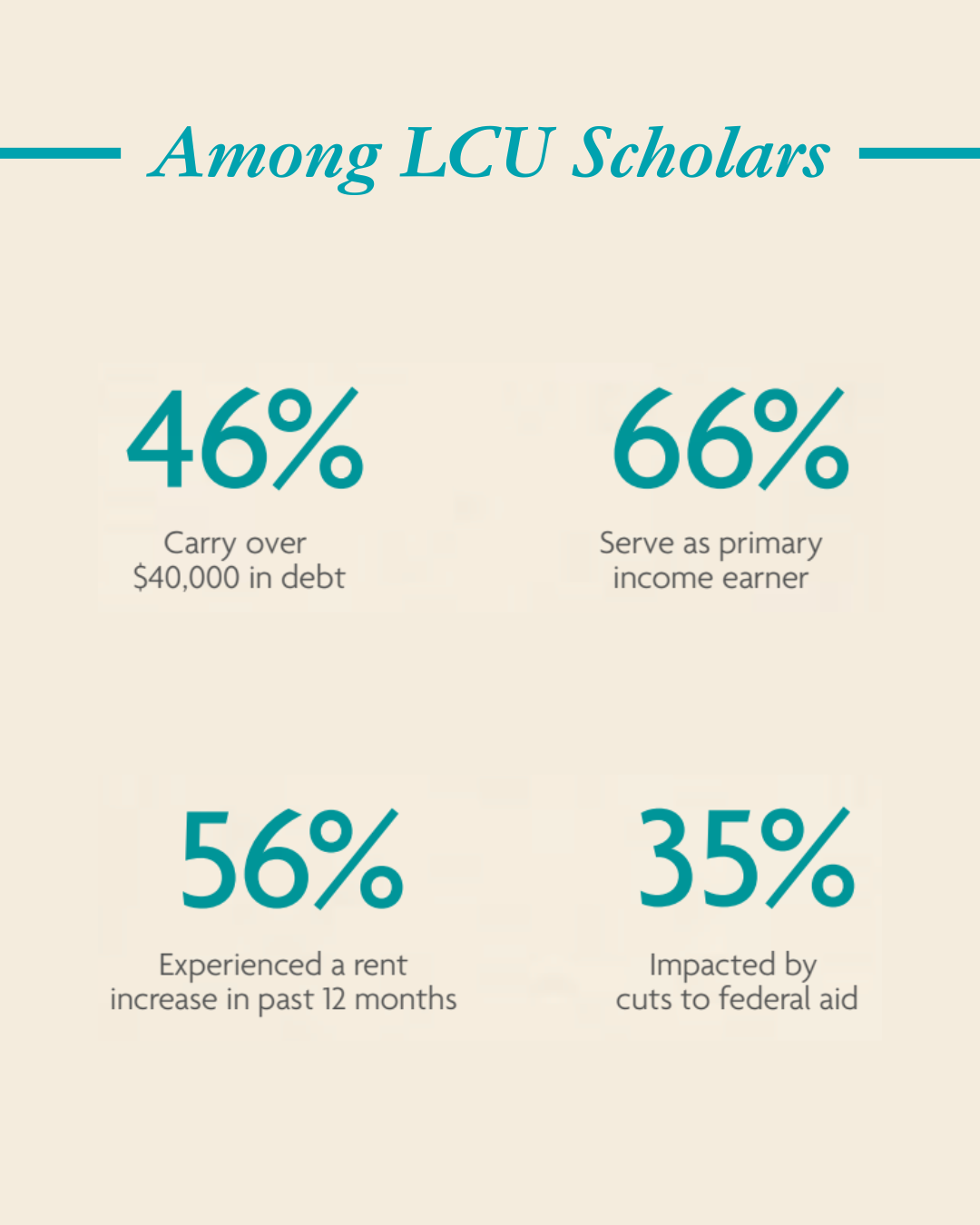
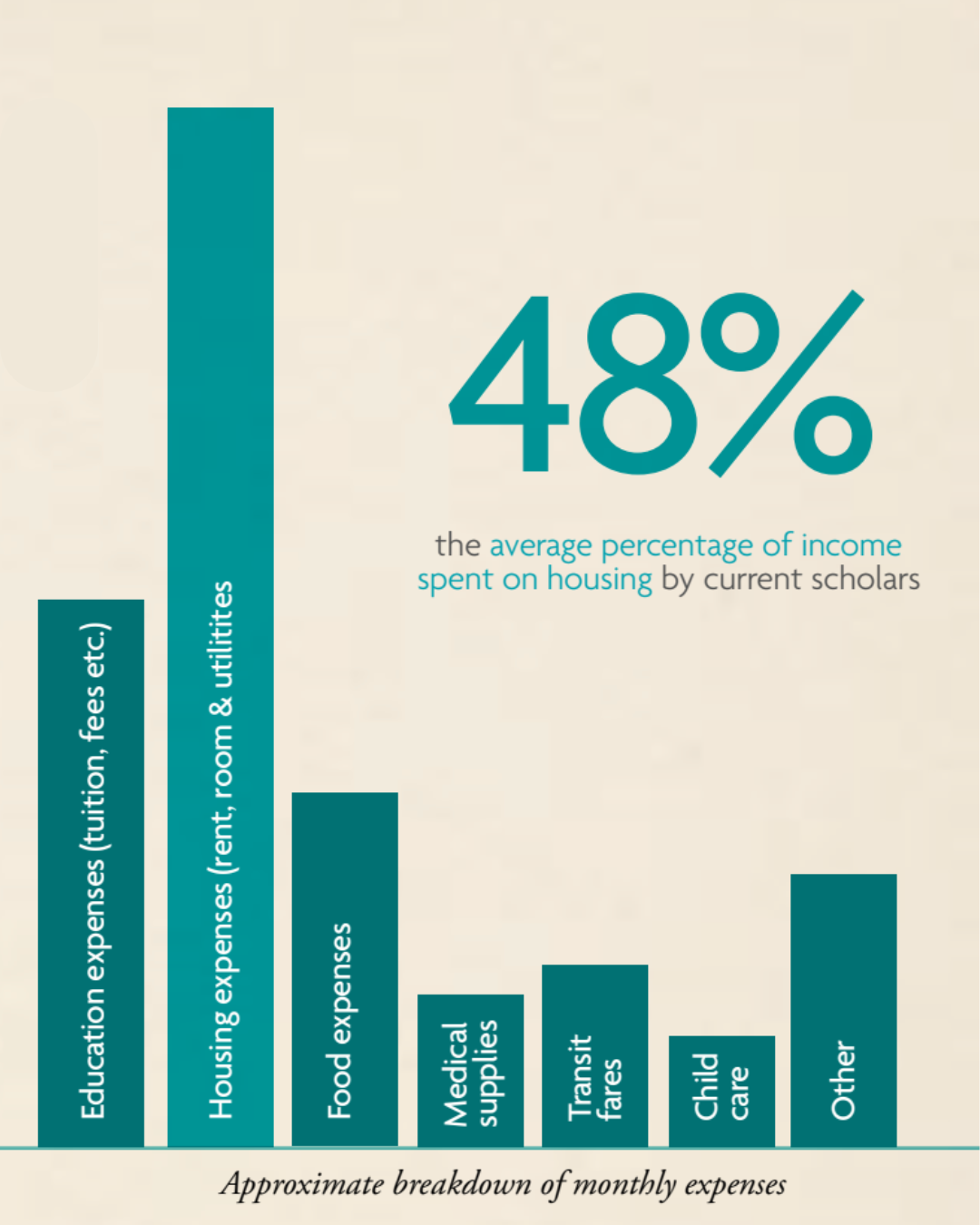
    Women with a college degree are more likely to be employed, earn higher incomes, and achieve long-term financial stability than women without degrees. Yet LCU Fund research shows that our scholars spend nearly half of their monthly income on housing, leaving them cost-burdened. Students in their third year or beyond—the undergraduate population the LCU Fund supports—face higher rates of housing insecurity compared to first-year students. Closing these gaps in the cost of living for women scholars is a crucial pathway to disrupting the cycle of poverty.

  • Housing remains a persistent unmet essential need and obstacle to college completion.

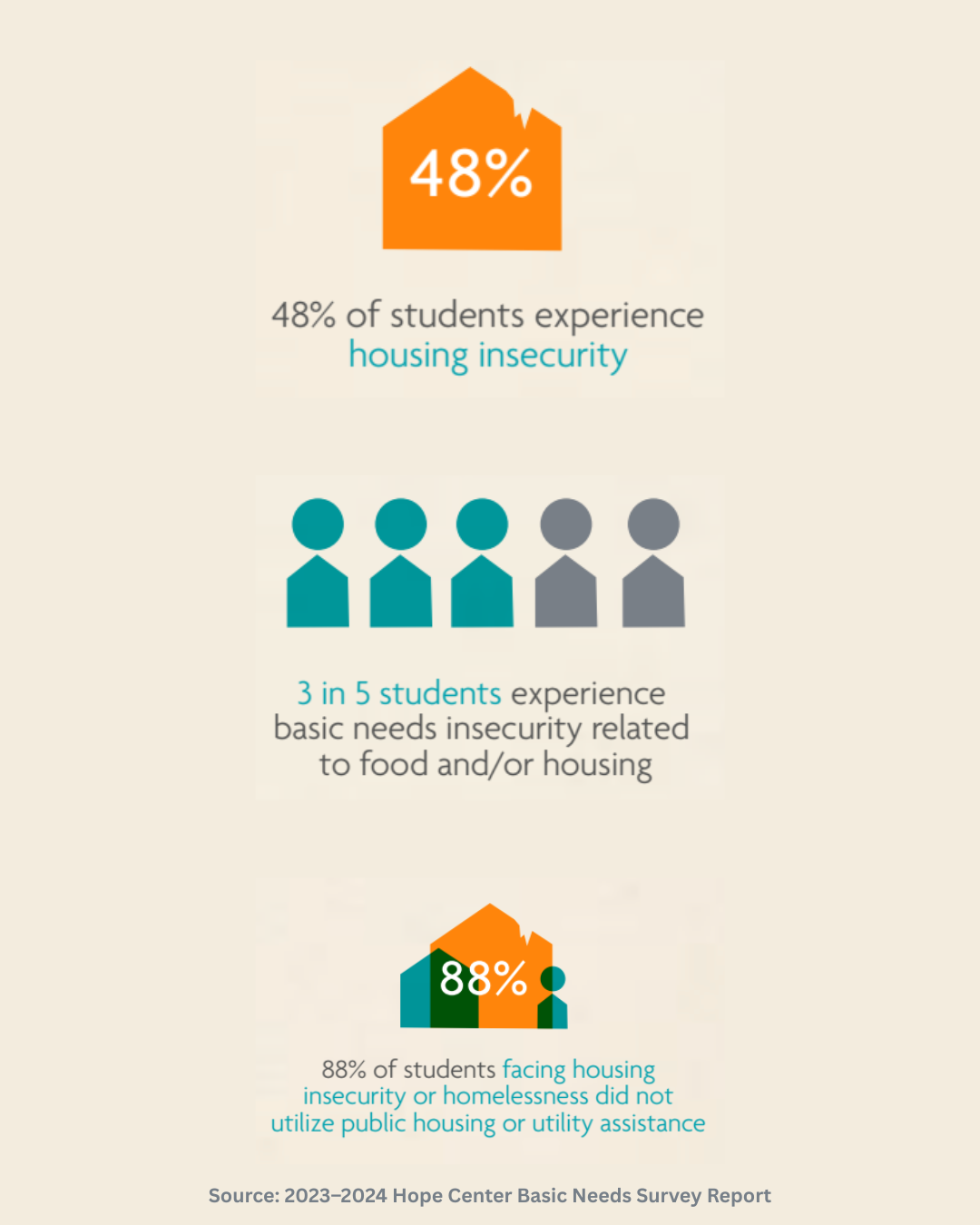
    National research shows that the lack of safe, affordable housing disproportionately affects lower-income students, students of color, and women scholars—and has cascading impacts on their long-term economic resilience. Our housing grants provide a crucial stabilizing force, helping ensure that students in need remain securely housed and preventing scholars committed to completing their education from slipping into homelessness or having to drop out of school.

  • Demands for advanced degrees to reach the highest rungs in the career ladder.

    The vital roles of educators, health service providers, public administrators, social workers, and professionals in the visual and performing arts often require expensive advanced degrees—creating significant barriers for low-income scholars who aspire to enter these fields. The LCU Fund helps level access to these opportunities by offsetting the high costs of specialization in social impact professions. By supporting women scholars as they pursue the credentials required for these career paths, the LCU Fund unlocks their full potential for economic parity and advances a more equitable, inclusive workforce.

GRANT CYCLE

LCU Fund grants are made for one-year at a time with a competitive funding process implemented annually. The LCU Fund does not accept unsolicited grant proposals.

Matching Grants: To maximize housing support for low-income scholars, the LCU Fund encourages all grantee schools to provide a match. Grantee schools with endowments of at least $10M with $35,000 or more per enrolled scholar provide a minimum of a 50% match. 

Grantee Schools Eligibility: All applicant schools must be accredited by a nationally recognized accrediting body, offer degrees in LCU Fund-priority fields of study, be registered as a not-for-profit (501C3) and operate in the five boroughs of New York City.

Institutional Partners

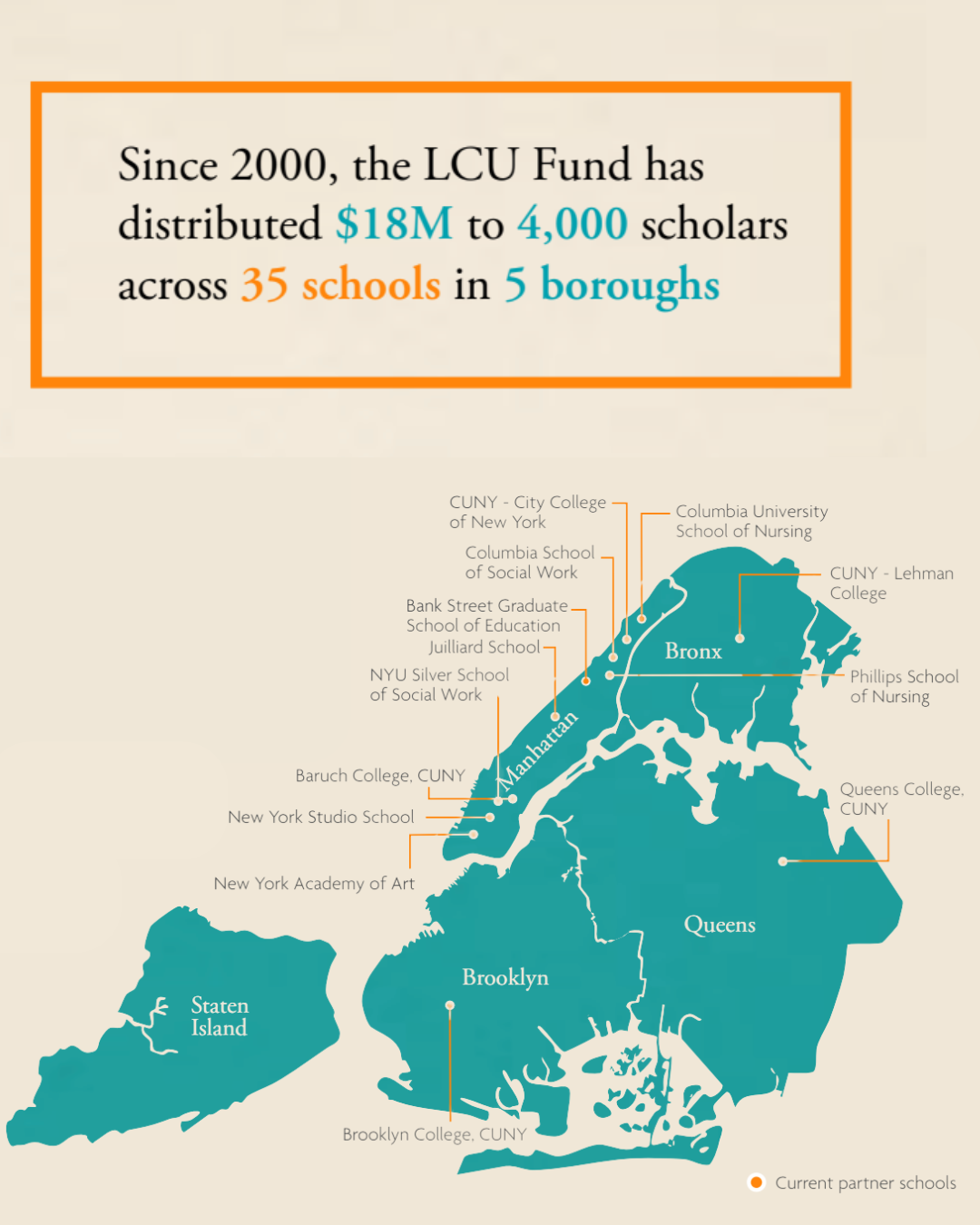
Geographic Scope of Giving: The LCU Fund awards grants to selected four-year colleges or universities, arts academies or conservatories; public or private in the five boroughs of New York City – that offer provide undergraduate and / or graduate degrees in the Fund's priority fields of study.

Grantee School Visits: Each year, the LCU Fund's Board of Directors conducts a site visit at funded institutions which includes a conversation with school leadership and a meet and greet with funded scholars.